
The Phoenix Rising: Grief, Fire and the Cycles of Change
Through the lens of Feng Shui Fire Period 9 (2024-2044)

As Fire Period 9 (2024-2044) unfolds, we are invited to see change not simply as an ending, but as part of a larger cycle of transformation, illumination and renewal.
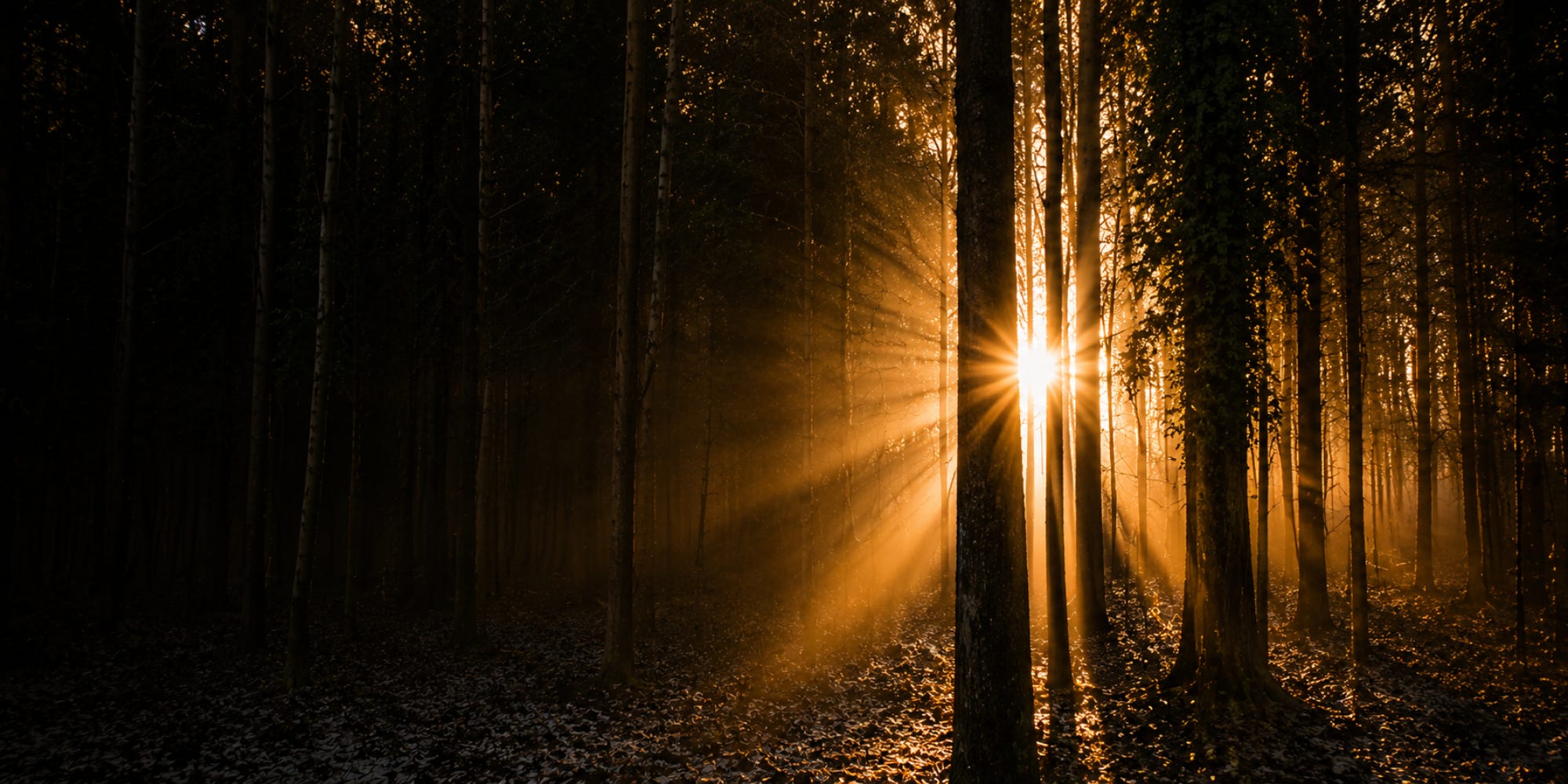
I woke this morning to a beautiful spring day, the first true sighting of the season’s change. A new beginning after a long period of death, decay and dormancy. The shoots on the trees and the lightness in the air made me reflect on the many forms of grief I’ve experienced over the last two years.
The deeply personal grief of human loss, the quieter losses not connected to death, the grief that comes with change and transition, and the collective grief carried by humanity itself. Yet, as I listened to the birds in full singsong, I was reminded that perhaps wintering is essential to the British psyche. Without the polarity of winter, we would never fully appreciate the beauty and abundance of the other seasons. Without winter, perhaps we would never experience those butterfly flutters of excitement for what might be waiting around the corner.
Without winter, perhaps we would never fully appreciate the beauty and abundance of spring.
For many, however, change is not associated with excitement but uncertainty, something beyond human control that threatens our emotional safety. In primitive times, early dwellers were hard-wired for these shifts in season and climate, when survival depended on anticipation and preparation for harsher conditions. This ancestral survival instinct remains deeply embedded within us, despite many of us now living comparatively comfortable lives.
In recent years, I’ve been learning to live more cyclically, to surrender to change and the unknown, and to focus more deeply on what I do have the power to navigate. What hindsight has taught me is that much of what has happened in my life appears to have been steered by something greater than myself, although the understanding of it often only arrives years later.
In Chinese culture and metaphysics, there are the “Three Lucks” (San Cai), representing the three pillars of destiny, each contributing roughly one-third to our life’s path: Heavenly Luck (destiny), Earthly Luck (environment), and Human Luck (our choices, actions and mindset). Surrender belongs to the cyclical world, the realm of destined luck, where human control is limited.
We see this pattern everywhere: in the seasons, the human life cycle, the menstrual cycle, and both the lunar and solar cycles. In the cyclical world, change is inevitable. Yet even within seemingly powerless moments, we still have the ability to reframe how we meet uncertainty when it arises.
I’m choosing to view change and uncertainty through the lens of potential transformation. Nature continuously offers us metaphors for this process. The caterpillar’s metamorphosis into a butterfly feels especially apt. Even in places marked by unimaginable destruction, nature often finds a way to regenerate, as seen in the return of wildlife to Hiroshima following the atomic bomb.
Change often evokes fears of decline, loss, or misfortune, yet nature repeatedly reminds us that nothing truly disappears; it transforms.
In the Chinese Five Element system, a log placed upon a fire does not die; it transforms into ash. Historically, people scattered ash onto land as part of agricultural ecosystems, with the minerals contributing to long-term regeneration after disturbance. Increasingly, I find myself wondering whether there is no such thing as true loss, but rather a continual transfer of energy.
Nature reminds us that nothing truly disappears. It transforms.
I’ve begun to view grief through this same lens, not through the linear and finite idea of loss, but through transference. In biology, stress on muscles creates growth. In psychology, periods of rupture can lead to reorganisation, insight, resilience, and entirely different ways of living.
When a human passes, we are left with memories, both our own and those shared collectively by others, an energy that continues to shape us and move through future generations. If grief is an expression of love, where does that love go? We do not lose the love itself, only the human interactions we once shared. This reframing has helped me begin to see death less as an ending and more as a form of transformation.
What if grief is not the loss of love, but evidence that love remains?
It also led me to reflect on Biologist Rupert Sheldrake’s Morphic Resonance, the idea that self-organising systems in nature may inherit a kind of collective memory from previous members of their species through morphic fields rather than the brain alone. For some, this raises the possibility that aspects of memory, identity, or consciousness may extend beyond physical death. It makes me wonder whether grief itself is, in some way, the mind trying to tune into the lingering imprint of someone we have lost, creating those strange moments where we believe we sense their presence, scent, or voice.
The idea that the soul may still remain available to connect with has brought me great comfort during periods of grief.
Yet grief is not limited to the loss of human life. In recent years, I started to recognise its presence in many other forms. The grief that accompanies the loss of certainty, the shedding of old identities, and the unravelling of beliefs and perceptions that once shaped how we understood ourselves and the world around us.
Increasingly, I found myself observing these themes not only within my own life, but in the experiences of others. It felt as though many people were being asked to confront difficult truths, reassess long-held assumptions, and navigate profound periods of change and uncertainty.
Change inevitably brings loss. Whether we are letting go of a person, a relationship, an identity, a belief, or a way of life, every ending asks something of us emotionally. Grief is often the companion of transformation, which is perhaps why these themes have felt so relevant in recent years.
The rose-tinted glasses have fallen away for many in recent years, and the illumination, both personal and collective, can feel stark and confronting. Illumination, once seen, cannot easily be unseen, often triggering difficult but necessary unravelling.
In feng shui, we entered a powerful new cycle known as Period 9 in early 2024, a twenty-year cycle represented by the Fire element. Fire illuminates, exposes, transforms and renews. It offers both destruction and rebirth simultaneously.
Period 9 is also the final twenty-year cycle within a much larger 180-year super cycle, which is why it is sometimes associated with themes of endings and transformation, not the literal death of humanity, but the breakdown and restructuring of outdated systems, beliefs and constructs.
The symbolic animal associated with this period is the Phoenix Rising, an enduring symbol of resilience, rebirth and renewal after difficulty. A reminder that life exists in polarity, just like the Yin and Yang.
For me, this period of illumination has revealed the many unconscious scores accumulated over a lifetime, imprints I never realised had settled so deeply within my nervous system. It feels as though I spent much of my life looking through a single lens, only to suddenly be handed another perspective entirely.
The newer lens is not always comfortable. It reveals harshness, contradiction and difficult truths, yet it also offers greater depth and honesty. There is truth in the saying “ignorance is bliss,” and I now understand why so many people spend a lifetime avoiding stillness, frightened of what they might discover beneath the masks they wear.
Yet for many of us, the confrontation eventually arrives.
What follows is often a different kind of grief entirely: the loss of held beliefs, held regard, and long-standing perceptions of ourselves, others, and the world around us. I’ve since come to understand what Carl Jung meant by “shadow work”, the process of exploring and integrating what was once unconscious, hidden, or deeply repressed within the psyche.
One of the most difficult aspects of transformation is the isolation it can bring. As awareness changes, we often become less tolerant of what was once tolerable. People, places, ways of working, living and socialising begin to shift, and eventually, a more truthful version of ourselves emerges from the ashes.
Transformation often asks us to leave behind what no longer aligns with who we are becoming.
In the depths of change, chaos and grief, I found there is always one constant: the sun continues to rise and set each day without fail. Even when our personal world feels as though it is collapsing, the sun remains.
In Taoism, there is an expression called Wu Wei, meaning “Effortless Action.” The sun does not struggle to rise or resist setting; it simply follows its natural course. Wu Wei taught me that change is part of nature’s order and that there is wisdom in moving with it rather than constantly forcing against it.
Nature does not cling to a single season, yet humans often exhaust themselves resisting change, fearing futures that do not yet exist rather than meeting life as it unfolds. This does not mean we passively accept injustice or avoid action, but rather that we learn to respond with presence, clarity and trust instead of becoming consumed by fear, resistance or the illusion that we can control every outcome.
Like the changing seasons, there are times for action, times for rest, times for growth and times for letting go. When we move with these rhythms rather than against them, we often find greater resilience, wisdom and peace, even amidst uncertainty.
Over the last few years, Wu Wei has profoundly changed how I approach grief, particularly the loss of human life. After loss, the yearning can feel unbearable, threatening our emotional security and creating a deep sense of helplessness. Yet I’ve come to understand grief itself as another cycle, one in which the brain slowly rewires itself to accept a new reality and rebuild emotional safety.
Wu Wei taught me how to surrender to grief, to lean into it rather than resist it, even when I could not control what was happening. By allowing myself to fully feel pain instead of suppressing or delaying it, I began to understand how buried emotions often resurface later in more destructive ways, creating yet another cycle of suffering.
It taught me that we, too, are part of nature’s cycles, and that when we stop resisting what we cannot control, we can begin to find calm within uncertainty itself.
Peace emerged when I stopped fighting what I could not control.
Tears have become an almost daily ritual over the last few years. I’ve learnt to appreciate the extraordinary sophistication of a system unique to the human species: the release of mineral-rich water through the eyes acting as a biological, neurological and social regulation process. Tears are not weakness, but a release of emotional intensity exceeding the nervous system’s holding capacity.
Yet society often encourages us to suppress tears, sadness and emotional expression. In recent years, I’ve given myself permission to follow Wu Wei and stop resisting nature, allowing the tears to fall fully until they naturally cease rather than interrupting or suppressing the process.
What I found on the other side was transformational. Once the emotional cycle completed itself, acceptance slowly emerged, and within that acceptance came a degree of peace.
Not because the grief disappeared, but because I stopped fighting its existence.
Perhaps the fire comes not simply to destroy, but to illuminate what can no longer be carried into the next cycle of our lives.
Perhaps this is what nature has been trying to teach us all along: that healing does not always come from controlling, fixing or avoiding pain, but from allowing ourselves to move fully through it.
Nature does not resist its own cycles. Winter does not apologise for arriving, trees do not cling to dead leaves, and the sun does not fear setting each evening. Everything moves, transforms, dissolves and begins again.
Maybe humans were never designed to remain fixed either.
And maybe that is the quiet wisdom hidden within grief itself: that even in the ending of one version of ourselves, life is already preparing the ground for something new to emerge.
Written by Abbie Barker
Classical Feng Shui Consultant and Founder of The Modern Dragon Feng Shui, London, UK